Sleep environment
How to make your bedroom better for sleep
I built Veil because I'm a light sleeper. Sound matters to me, but it is only one part of my setup: a dark room, cool air, a good blanket, and a routine I can actually repeat matter too.
This guide combines practical sleep-environment tips with my personal preferences. My thermostat setting and supplement experiences are not prescriptions. The general guidance is linked to NIH sources; I write as Veil's founder, not as a clinician.
Start here: Reduce unwanted light, choose a comfortable room temperature and bedding, limit disruptive noise, and keep a simple wind-down routine with consistent sleep and wake times. If you enjoy sleep sounds, try a steady sound at a comfortable, low volume. Change one thing at a time to find what suits you.
Make the room dark enough for you
Start with unwanted light: streetlights, gaps around curtains, and devices that brighten the room at night. Blackout curtains or an eye mask are options if light bothers you. Keep any light you need for moving around safely.
My setup: I want the room as dark as possible. I prefer blackout curtains because even small changes in light often disrupt me.
A cool, dark, quiet bedroom is part of NIH's healthy sleep habits guidance. Turning down bright evening light and reviewing notification settings are practical places to start.
Try cool air and comfortable bedding
Aim for a comfortably cool room, then adjust bedding to suit you. There is no single thermostat setting in this guide that everyone needs to follow.
My setup: At home, I set my thermostat to 68°F (20°C). I like cold air with a good blanket. That combination is my preference, not a universal best temperature.
Reduce disruptive noise, then choose a steady sound if useful
Start with noise you can reduce, such as unnecessary alerts or a rattling device. If outside sounds still bother you, a steady background sound is an option to try. People differ in whether they prefer silence, fan sounds, or noise colors; sound is not a treatment for insomnia.
Choose a comfortable, low level that takes the edge off distractions. There is no need to chase maximum volume. Compare white, pink, and brown noise, or try fan noise free in your browser before choosing.
Why I use sleep sounds, even on a quiet night
For me, sleep sounds help with two things. The first is noise masking. I live on a fairly quiet block in Brooklyn, but trash pickup and construction can still get loud. My cat also sometimes decides the middle of the night is a good time to meow at me. A steady background sound helps take the edge off those interruptions.
The second is what happens when the room is perfectly quiet. My brain can start thinking about everything, including things that are not useful to work through when I am trying to sleep. A soothing sound gives me something simple to latch onto. I find it easier to settle and let those thoughts go. That is my experience, rather than a promise that sound will work the same way for everyone.
My setup: I lean toward Veil's Airplane Cabin sound with an eight-hour sleep timer. I like having one steady sound for the night and a timer that ends playback.
Veil generates its sounds on-device, with no recorded loops. Airplane Cabin is a Premium sound; white, pink, and brown noise and Slow Fan are free. The sleep timer is available in the free tier too.
A glance at the night, without doing the math
I use Veil's Bedside Clock with the Night Arc face. It lets me roughly judge how much of the night remains before my chosen morning time. It is a visual reference, not a measurement of how much sleep I have actually had.
What I love is not having to fully focus my eyes on clock digits and then calculate how much longer I can sleep. That little bit of thinking tends to wake me up more than I wanted. The arc gives me the rough answer at a glance.
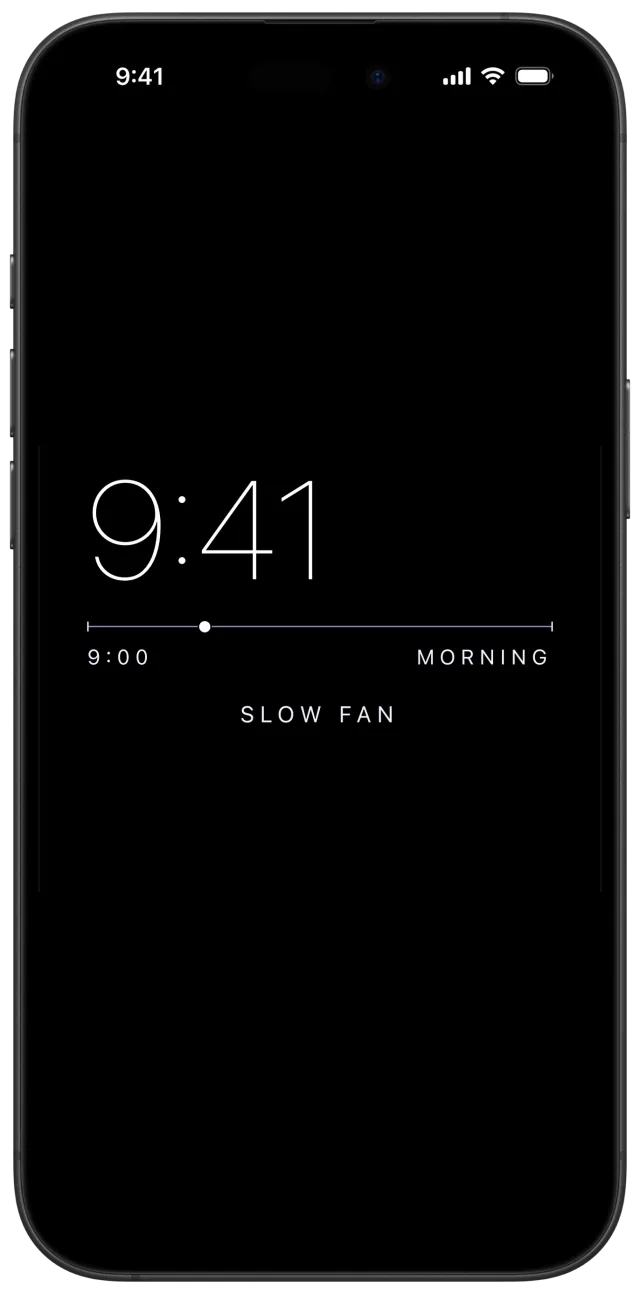
Set Night Arc's morning time to match your intended wake time; the sleep timer is a separate playback setting. Bedside Clock can stay visible while the phone is charging. On battery, the screen follows your device timeout while audio continues. Keep brightness comfortable, or leave the screen off if any visible light bothers you.
Build a wind-down routine you enjoy
A simple routine is easier to repeat than a long checklist. NIH suggests quiet time before bed and reducing bright screen light. Putting the phone down around 30 minutes before bed can be a starting point to try, rather than a precise rule everyone must meet.
For me, that means minimizing screens and doing some reading. I also love a cup of tea, but I keep the amount modest because I do not want a bathroom trip later. If you choose tea in the evening, remember that many teas contain caffeine; consider a caffeine-free option.
When I have time, a warm bath is especially nice, and I enjoy adding Epsom salts. The salts are part of a ritual I like, not a claim that a bath delivers a proven magnesium sleep treatment. A warm bath and relaxation techniques are included in NIH's bedtime guidance.
If breathing exercises appeal to you, try a few minutes of gentle, comfortable breathing as part of winding down. There is no need to force breath holds or treat a specific breathing pattern as a guaranteed way to fall asleep.
Keep the timing reasonably consistent
A regular bedtime and wake time are useful anchors. Adjust the routine to your actual life rather than making one late night feel like a failure.
I try to keep a consistent time, and Veil's optional bedtime reminder is a useful nudge. You choose the reminder time, and can change it or turn it off. It helps me remember the routine; it does not make me fall asleep.
What about magnesium and melatonin?
My experience: If I feel especially awake, magnesium sometimes seems to help me. I am less keen on melatonin: for me, it can help with falling asleep without helping me stay asleep, and I can feel groggy afterward. Those are personal observations, not evidence that either supplement will have the same effect for you.
According to NCCIH's evidence review, research on magnesium for insomnia is limited and findings are inconsistent. Melatonin can be useful for some sleep-timing problems, such as jet lag, but is not a general solution for chronic insomnia.
Supplements can have side effects and interact with medicines. Discuss them with a clinician or pharmacist instead of treating them as a necessary part of a bedtime routine. This guide does not recommend a dose or a supplement stack. See NCCIH's melatonin guidance for more detail.
A small checklist for tonight
- Reduce unwanted light while keeping a safe path through the room.
- Choose a comfortable room temperature and bedding.
- Reduce disruptive noise; try a low, steady sound only if you like it.
- Pick one wind-down activity, such as reading or a warm bath.
- Choose a bedtime and morning time you can repeat.
Try one change at a time so you can tell what feels useful. If trouble falling or staying asleep persists or affects your daytime life, talk with a health professional. Bedtime habits and a sound app do not replace care; NIH describes CBT-I as a usual first treatment for long-term insomnia.
Find a sound that fits your room
Try Veil's free browser sounds, then take your preferred sound into your bedtime routine.
Listen to the noise colorsSources and how this guide was written
Written by Colin Shepard Hanson, Veil's founder, from his own bedtime preferences. General guidance was checked against the following sources on October 7, 2026. This article has not been medically reviewed.
- NHLBI: Healthy Sleep Habits
- NCCIH: Sleep Disorders and Complementary Health Approaches
- NCCIH: Melatonin, What You Need to Know
- NHLBI: Insomnia Treatment
Learn about Veil's accessibility features, or browse more sleep sound resources.